How Adaptive Algorithms Shape Bonus Allocation in Cross-Platform Live Gaming Environments
Jakob Reed · Aug 19, 2026

How Adaptive Algorithms Shape Bonus Allocation in Cross-Platform Live Gaming Environments
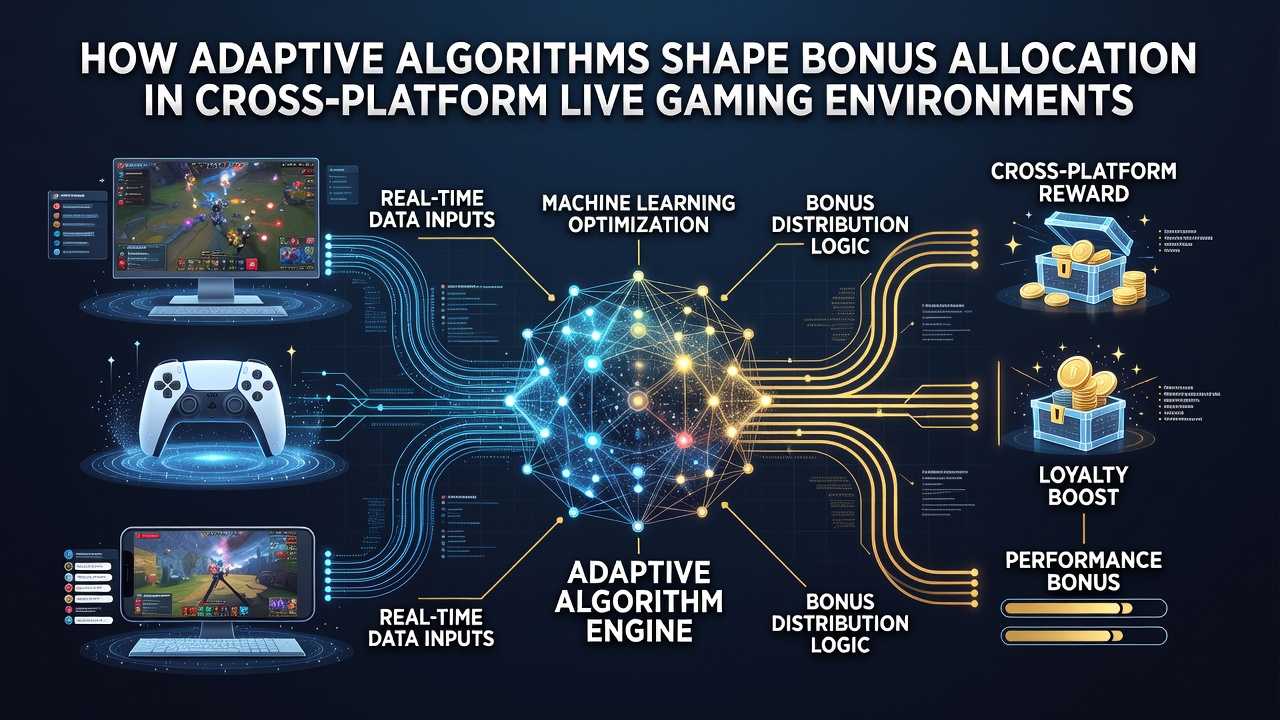
Adaptive algorithms now drive bonus allocation decisions in live gaming environments that span multiple platforms, and these systems process player data in real time to adjust rewards based on engagement patterns, session length and device usage. Data from industry reports indicate that such algorithms synchronize information across mobile, desktop and console interfaces so that bonus offers remain consistent while responding to individual behavior signals. Researchers have documented how machine learning models analyze variables like play frequency, average wager size and platform switch rates to determine when and how much to allocate in promotional credits or free rounds.
Core Mechanisms Behind Real-Time Adjustments
These algorithms rely on reinforcement learning frameworks that update their parameters after each interaction, which allows the system to refine predictions about which bonus type will sustain participation on a given platform. Studies from academic institutions show that models trained on cross-platform datasets achieve higher accuracy when they incorporate timestamped logs from live sessions, where latency, connection stability and interface responsiveness all factor into the allocation logic. Observers note that the process begins with feature extraction from raw telemetry, moves through clustering of similar player profiles, and ends with a policy layer that selects bonus values within predefined regulatory limits.
Data Inputs That Feed the Models
Player telemetry streams supply the primary inputs, and these include metrics such as time spent in live dealer tables, frequency of platform switches during a single session and historical response rates to previous bonus offers. According to figures released by the New Jersey Division of Gaming Enforcement, cross-platform operators recorded a measurable uptick in synchronized account activity during the first half of 2026, which coincided with wider deployment of these adaptive systems. The models also ingest contextual signals like device type, operating system version and network conditions to avoid issuing bonuses that would prove unusable on lower-performance hardware.
What's interesting is how the algorithms balance short-term retention goals against longer-term house-edge considerations, because the system must allocate bonuses that encourage continued play without exceeding internal risk thresholds. One study revealed that operators who integrated live-game telemetry with historical bonus redemption data saw more precise targeting, which reduced instances of unused promotional credits across platforms.
Cross-Platform Synchronization Challenges
Live gaming environments present unique synchronization demands because sessions often continue across device changes, and the algorithm must maintain state continuity to prevent duplicate or conflicting bonus awards. Industry organizations such as the Gaming Research Exchange have published findings that highlight the need for low-latency data pipelines capable of updating player profiles within seconds of a platform switch. In August 2026 several major operators reported completing infrastructure upgrades that reduced cross-device reconciliation times by measurable margins, which in turn allowed finer-grained bonus adjustments during ongoing live sessions.
Those who have examined the underlying code note that edge-computing nodes now handle initial filtering of telemetry before forwarding aggregated features to central models, which cuts down on the volume of data traveling between regional data centers and the main allocation engine. This architecture supports the real-time nature of live dealer interactions while preserving the accuracy required for personalized reward distribution.
Regulatory and Compliance Integration
Regulatory frameworks in multiple jurisdictions require that adaptive systems log every allocation decision and provide audit trails that demonstrate fairness and transparency. Data from the Australian Communications and Media Authority indicates that operators must submit algorithm documentation showing how bonus parameters remain within approved ranges even as the model adapts to new player cohorts. Compliance teams therefore embed rule-based guardrails directly into the learning pipeline so that the system cannot propose offers that violate jurisdictional spending limits or age-verification standards.
Experts have observed that these guardrails function as hard constraints during the optimization step, which forces the algorithm to search within a narrowed action space rather than freely exploring all possible bonus values. The result is a system that can still personalize offers while satisfying external oversight requirements across different regulatory regions.
Conclusion
Adaptive algorithms continue to reshape how operators distribute bonuses in cross-platform live gaming environments by processing diverse data streams and enforcing real-time adjustments that respect both player behavior and regulatory boundaries. Reports from multiple sources confirm that synchronization across devices has become a baseline expectation, and the underlying models now incorporate feedback loops that refine allocation policies after every completed session. As infrastructure improvements accumulate, the precision of these systems is expected to increase further, which will influence the structure of future reward programs in measurable ways.