Decoding the Impact of Color Psychology on Player Choices in Virtual Slot Machine Interfaces
Hugo Keller · Jul 27, 2026
Decoding the Impact of Color Psychology on Player Choices in Virtual Slot Machine Interfaces
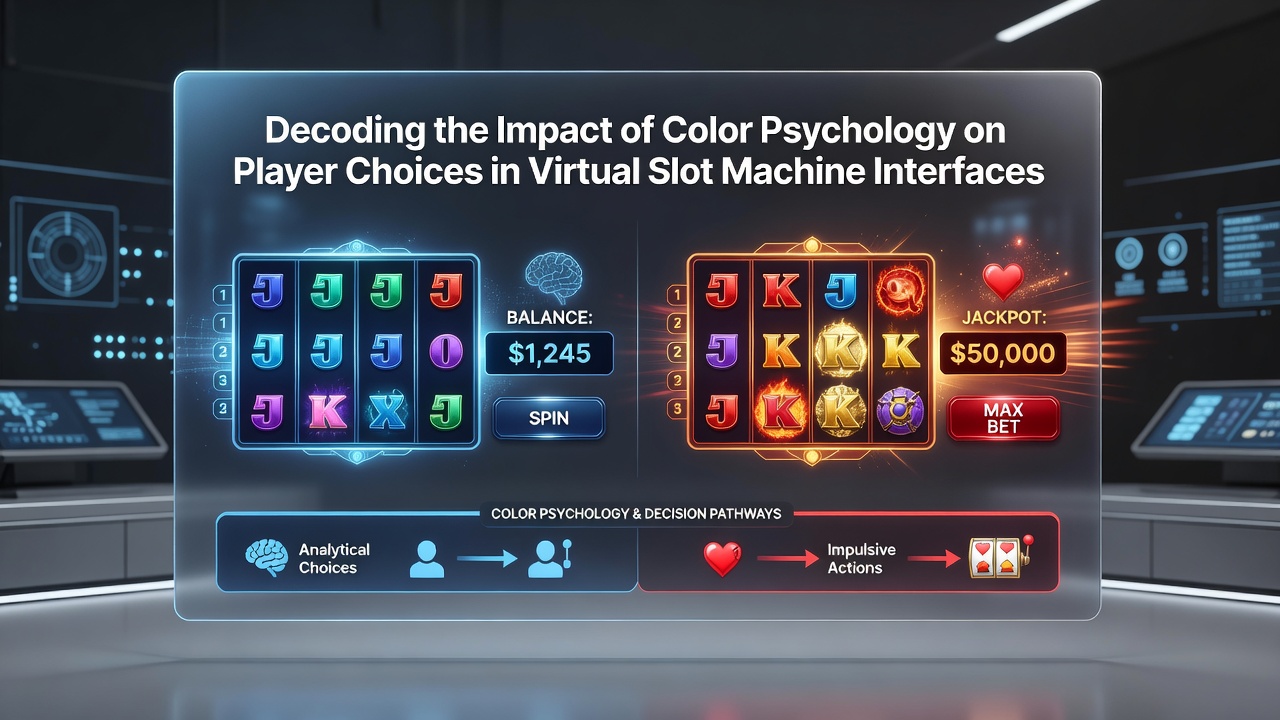
Color choices in virtual slot machine interfaces shape how players interact with game elements, select bet amounts, and decide when to continue or stop, according to research from multiple academic and industry sources. Developers integrate specific hues into backgrounds, symbols, and buttons because studies have shown that certain colors trigger responses tied to arousal levels, perceived risk, and reward anticipation. Data from gaming platforms indicate that red accents often appear near spin controls while cooler tones dominate payout displays, creating visual pathways that guide attention without requiring explicit instructions.
Core Principles Behind Color Responses in Digital Gambling
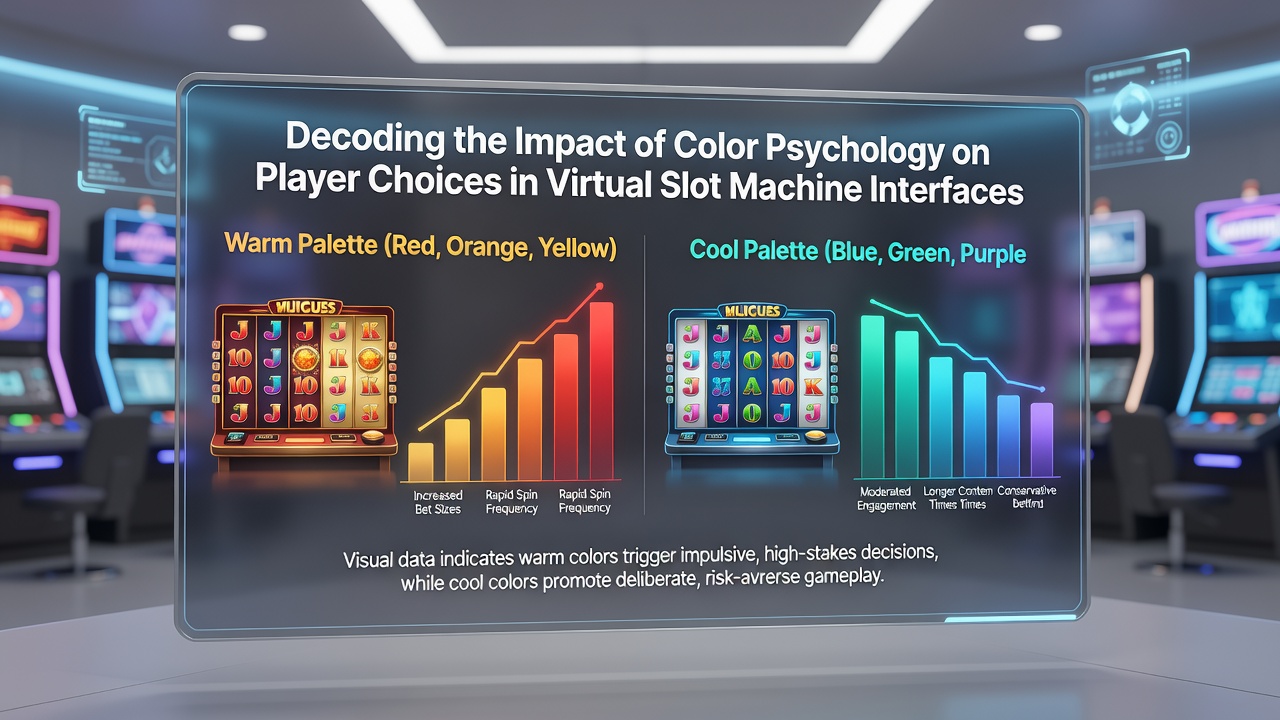
Psychological research has established that warm colors such as red and orange increase heart rate and perceived urgency, whereas blue and green promote calmer decision making. In slot interfaces these effects translate into measurable differences in session length and wager frequency. Observers note that platforms using predominantly red palettes record higher click-through rates on bonus features during peak hours, while those relying on blue schemes see steadier but lower-intensity play patterns. Researchers at institutions across North America and Europe have documented these correlations through eye-tracking experiments and A/B testing of live casino environments.
One analysis conducted by the University of Sydney's gambling research unit examined player navigation across 12 distinct color variants and found that warm-dominant screens prompted faster bet adjustments, yet cool-dominant versions correlated with longer overall dwell times. The study also tracked how saturation levels affected symbol recognition, revealing that high-contrast palettes reduced hesitation at the moment players chose between lines or multipliers.
Interface Elements and Their Color-Driven Effects
Buttons, progress bars, and win animations receive targeted color treatments because they sit at critical decision points. Red or gold highlights on spin buttons have been shown to shorten the interval between rounds, while green or teal tones on cash-out options extend consideration time before withdrawal. Developers adjust these variables based on telemetry that logs color exposure against metrics such as average bet size and frequency of feature activation. Industry reports compiled by the Canadian Gaming Association indicate that platforms testing multiple palettes within the same title observe up to 18 percent variance in feature engagement depending on the dominant hue family.
Background gradients and reel frames further modulate attention. Darker palettes with neon accents reduce visual fatigue during extended sessions, whereas bright gradients increase perceived excitement even when payout structures remain identical. Eye-tracking data collected in controlled lab settings demonstrate that players fixate longer on symbols rendered in complementary color pairs, which in turn influences the likelihood of selecting autoplay modes or increasing stake levels. These patterns hold across desktop and mobile formats, although mobile interfaces tend to amplify the effect because screen real estate forces tighter visual hierarchies.
Regional Variations and Platform Adaptations
Operators serving different markets adapt color strategies to align with local preferences and regulatory expectations. In Australia, platforms often incorporate earthy tones alongside traditional bright reels to match broader cultural aesthetics, while European sites lean toward minimalist palettes with subtle saturation shifts. Data aggregated by the European Gaming and Betting Association show that color testing conducted ahead of major software updates in 2025 produced consistent regional differences in session metrics. July 2026 updates to several major platforms are expected to incorporate these findings through dynamic color switching that responds to time-of-day usage patterns.
Payment and loyalty modules also receive color coding. Blue trust signals appear near withdrawal buttons across many North American sites, while gold or purple accents mark VIP progression tracks. These choices stem from cross-referenced studies linking color associations with trust and status perception, which in turn affect how frequently players access reward tiers. Platform analytics reveal that color-consistent loyalty interfaces correlate with higher repeat login rates compared with mismatched palettes.
Measurement Techniques and Ongoing Research
Companies track color impact through heat maps, conversion funnels, and randomized controlled trials embedded in live updates. Academic partnerships supply additional rigor. A 2025 paper from McGill University researchers outlined a framework for quantifying hue influence on risk tolerance, using both behavioral logs and physiological sensors. Their findings indicate that incremental saturation changes produce predictable shifts in bet sizing, independent of actual game mathematics. Similar work continues at institutions in Asia and South America, expanding the dataset beyond initial North American and European samples.
Regulatory bodies in several jurisdictions now request color-usage disclosures during software certification, although requirements remain focused on accessibility rather than psychological manipulation. Compliance teams review contrast ratios and color-blind accommodations while still permitting the core palette strategies that drive engagement metrics.
Conclusion
Color psychology operates as a measurable variable within virtual slot machine design, influencing navigation speed, bet selection, and session duration through established perceptual mechanisms. Research across universities and industry groups continues to refine understanding of these relationships, providing developers with data-driven guidelines for palette construction. As platforms evolve in 2026 and beyond, integration of region-specific and device-responsive color systems will likely expand, supported by ongoing telemetry analysis and academic collaboration. The intersection of visual design and player behavior remains an active area of study that connects psychology labs with live gaming environments worldwide.